01
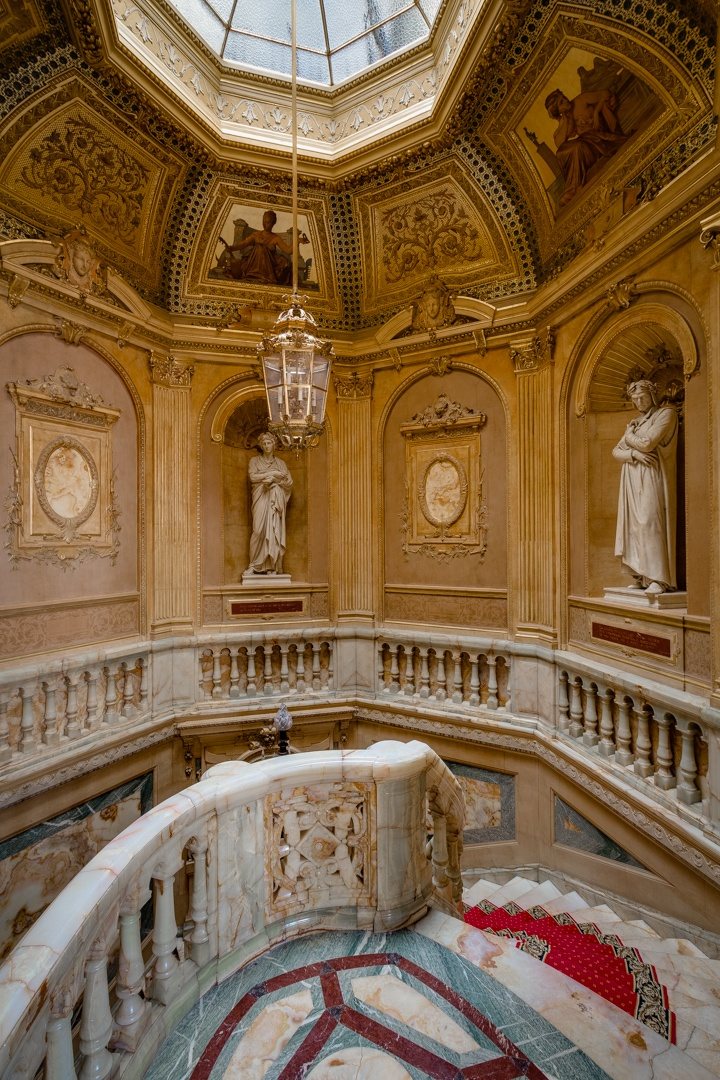
The Onyx Staircase
The monumental staircase is made from rare yellow onyx and decorated with marble statues of Dante, Petrarch and Virgil.
Discover one of the last surviving private mansions on the Champs-Élysées.
Buy TicketsA remarkable 19th-century private residence, created for Esther Lachmann, better known as La Païva.
Built between 1856 and 1866 at 25 Avenue des Champs-Élysées, the Hôtel de la Païva was designed by architect Pierre Manguin in the Italian Renaissance style.
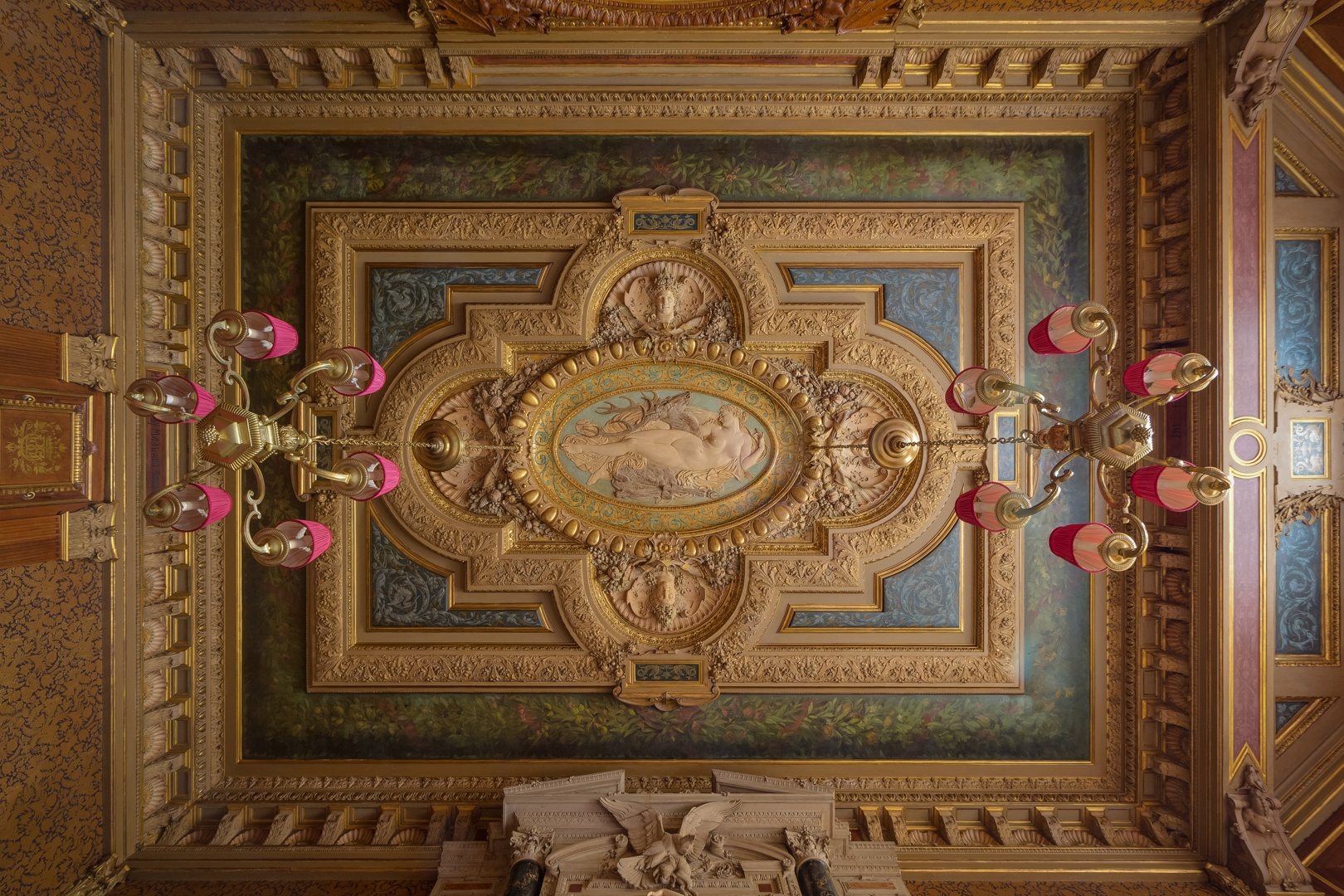
Created as an exceptionally luxurious residence, the hôtel brought together artists and craftsmen of its time. Its richly decorated interiors and rare materials have survived as an extraordinary example of the decorative arts of the Second Empire.
A glimpse of the architecture, interiors and craftsmanship that make the Hôtel de la Païva unique.
The monumental staircase is made from rare yellow onyx and decorated with marble statues of Dante, Petrarch and Virgil.
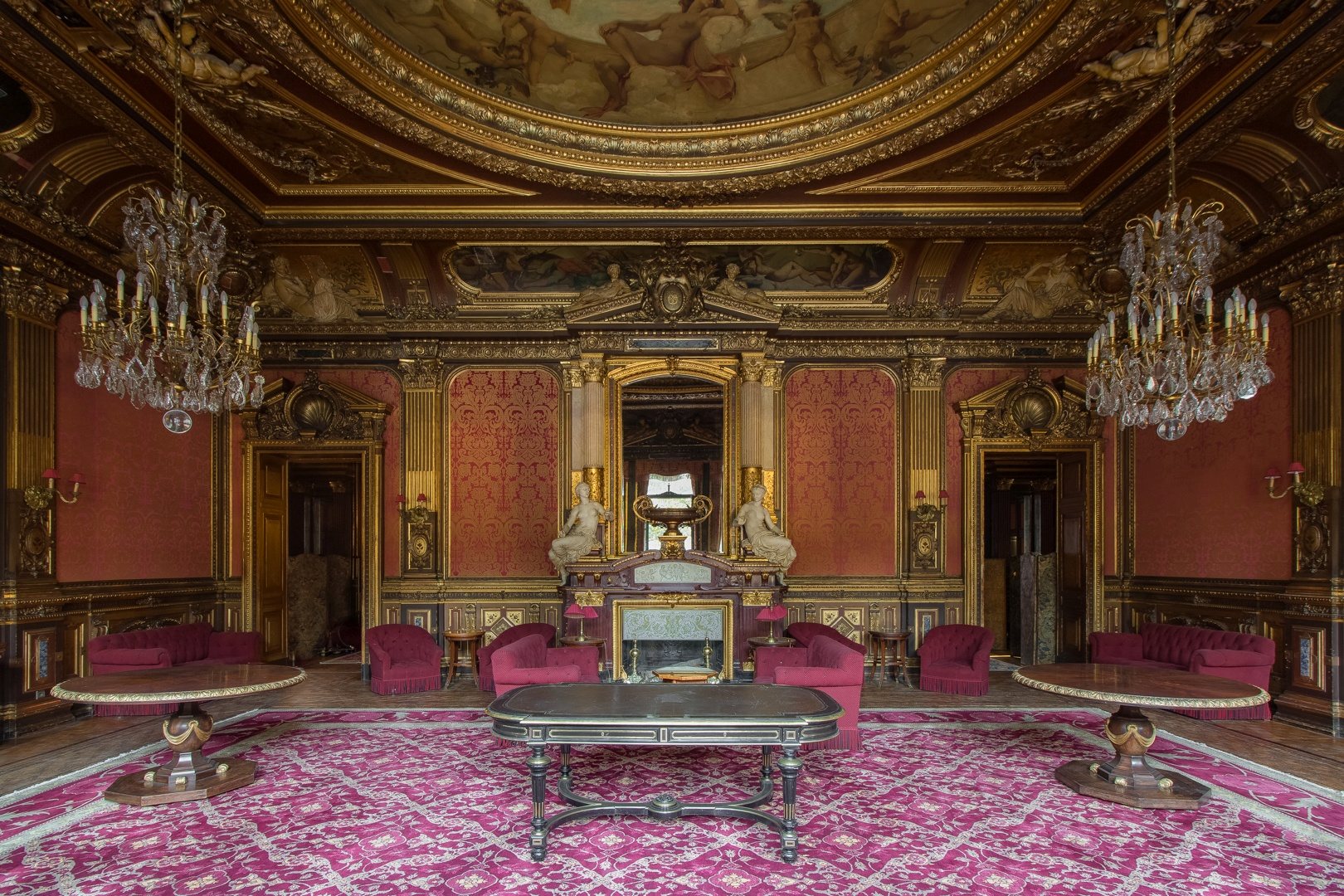
Overlooking the Champs-Élysées, the Grand Salon is richly decorated with carved woodwork, marble and sculpture. Its ceiling features a painting by Paul Baudry.
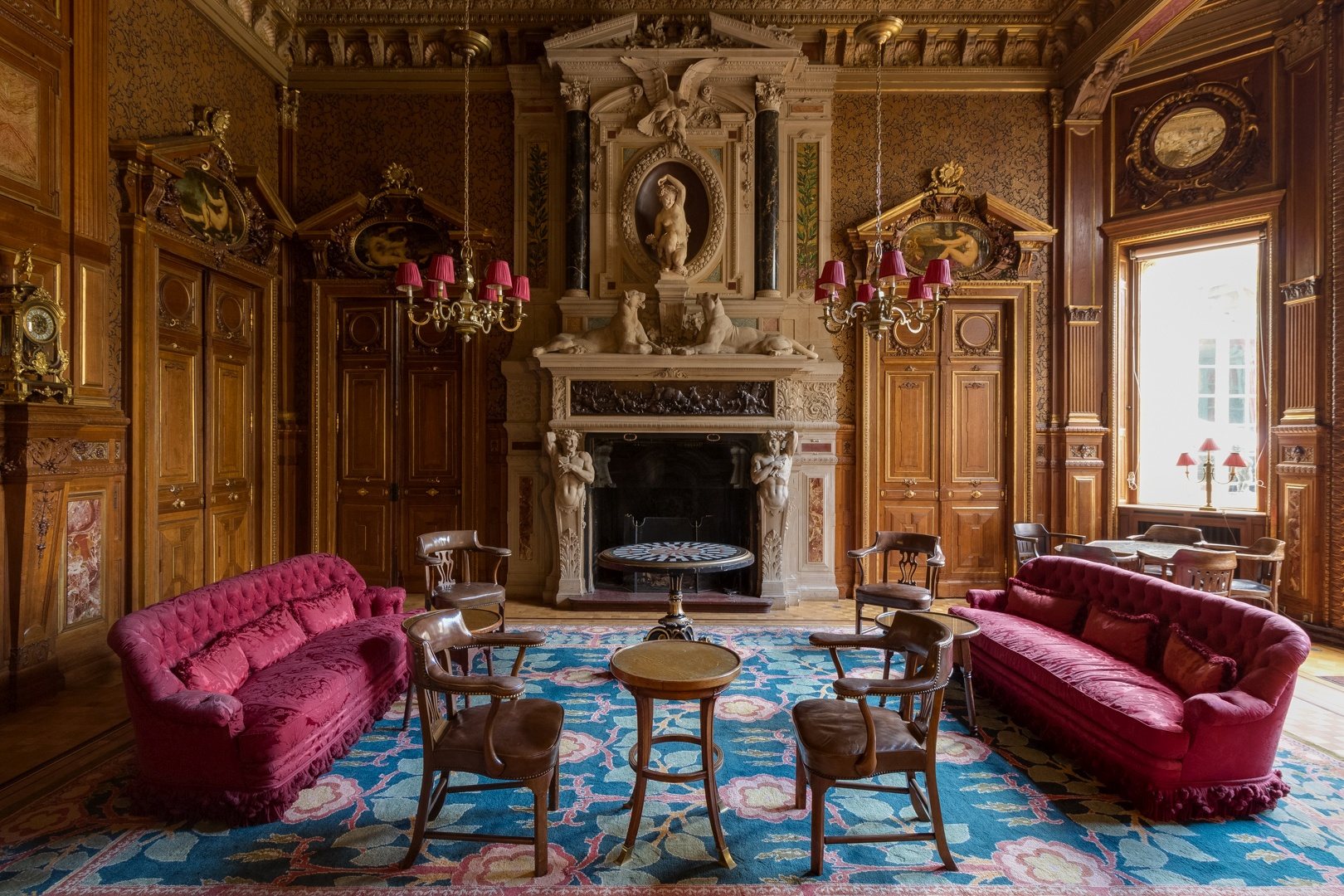
Richly decorated rooms reveal the lavish character of the hôtel, with carved woodwork, marble, ornamental details and historic furnishings.
La Païva received writers, artists and public figures at the hôtel from 1866. After she left France in 1877, the residence passed through several uses before the Travellers Club moved in in 1903 and acquired the building in 1923.
The Hôtel de la Païva was classified as a historic monument in 1980. Many of its defining architectural and decorative features remain today.
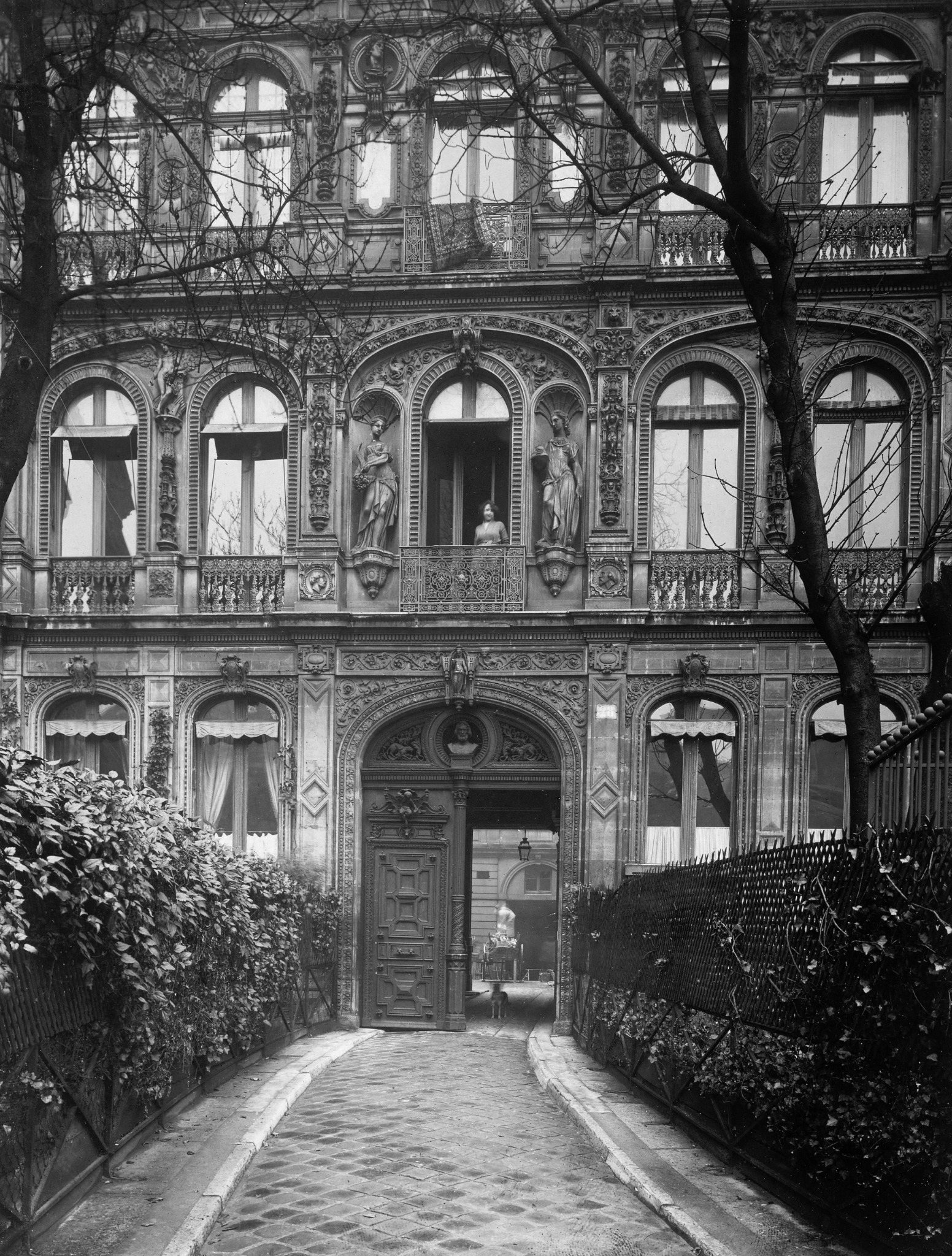
Experience the interiors of one of the last surviving private mansions on the Champs-Élysées.
Metro: Franklin D. Roosevelt
Get Directions